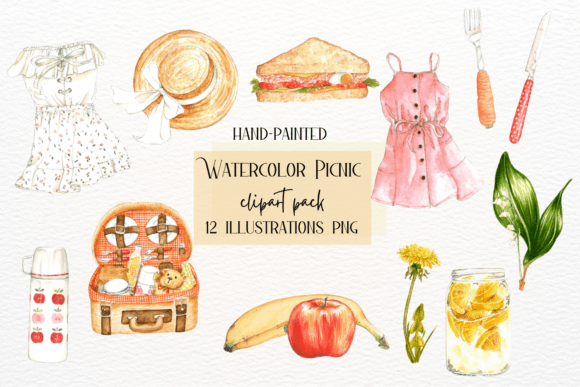
Reviewing 12 Watercolor Picnic Illustrations
As a designer who has spent years translating digital art into tangible thread, I approach every new asset with a critical eye. The market is flooded with generic patterns, but occasionally, a collection arrives that feels like it was born for the needle and hoop. That is exactly how I felt when I first opened 12 Watercolor Picnic Illustrations. This isn't just a set of clipart; it is a mood board waiting to be stitched. For those of us running craft businesses or simply looking to elevate our handmade products, finding an embroidery file that balances whimsy with structural integrity is a rare win.
The First Impression: Mood and Visual Personality
Before even loading the machine, I evaluated the visual weight of these designs. The watercolor aesthetic is tricky in embroidery because traditional stitch types can easily look too rigid or "blocky" compared to the soft, bleeding edges of paint. However, the artist behind 12 Watercolor Picnic Illustrations seems to have anticipated this. The shapes are organic, avoiding sharp, angular corners that often cause stitching errors on curved surfaces. The layout suggests a lightness that translates well to fill stitch techniques designed to mimic texture rather than solid coverage.
When I looked at the potential for custom apparel, the theme immediately screamed "spring collection." Whether you are planning a line of tote bag designs for a local farmer's market or creating baby embroidery items for a boutique shop, the picnic motif carries a universal appeal. It evokes nostalgia and comfort, which are powerful drivers for sales in the handmade sector. The illustrations feature classic elements like baskets, blankets, and floral accents, but they are stylized enough to feel modern rather than kitschy.
Real-World Application: From Hoop to Product
To truly understand the value of this machine embroidery design, I imagined a specific project: a high-quality cotton canvas tote bag for a small shop product line. In my mind, I placed one of the larger picnic basket illustrations near the bottom corner. The soft edges of the watercolor style would likely benefit from a slightly looser stitch density, allowing the fabric grain to show through and maintain that painterly feel. Unlike a dense logo that might pucker thin material, these designs appear flexible enough to sit flat on a variety of textures.
I also considered how this would work for sweatshirt embroidery. A smaller version of the design, perhaps featuring just a single flower or a teacup, could serve as a subtle chest pocket detail. The key here is scale. Because the original art relies on soft gradients, shrinking it too much risks losing definition. However, for a personalized gift like a kitchen towel or an apron, the medium-to-large scale works beautifully. Imagine a customer receiving a holiday embroidery gift featuring a picnic scene on a linen napkin; the tactile quality of the thread adds a layer of luxury that a printed item simply cannot match.
For the Etsy seller or small business owner, the versatility is the real selling point. You aren't limited to one application. These assets can be used to create embroidered patches for denim jackets, decorative accents on pillow covers, or even as part of a larger composition on a quilt. The cohesive nature of the twelve illustrations means you can build a brand identity around them, ensuring your finished product looks consistent across different inventory items.
Navigating Challenges: Where Caution is Needed
While the potential is high, practical experience tells us that no design is perfect for every scenario. There are specific situations where 12 Watercolor Picnic Illustrations requires careful handling. First, consider the fabric. On very stretchy materials like jersey knit, the intricate details of a watercolor style might distort if the wrong stabilizer is used. I always recommend testing on scrap fabric first to ensure the stitches don't pull the garment out of shape.
Second, think about color contrast. Watercolor designs often rely on light pastels. If you attempt to embroider these on dark fabrics without significant adjustments, the design may get lost. You might need to add a white underlay or use a satins stitch border to frame the softer fill areas. Similarly, on textured fabrics like heavy wool or boucle, the fine details of the illustrations could become muddy. In these cases, selecting the simpler, bolder illustrations from the set is a smarter move.
Another consideration is the hoop size. While some of the smaller motifs fit standard 4x4 hoops, the more complex compositions will require a larger frame. If you are working with curved surfaces like caps, ensure the design is mapped correctly so that the watercolor flow follows the curve of the brim rather than fighting against it. Finally, avoid using these delicate designs on items that require industrial washing unless you are confident in the thread tension and knot security.
Impact on Brand and Customer Perception
Using high-quality assets like 12 Watercolor Picnic Illustrations directly impacts how customers perceive your brand. In the world of commercial embroidery, professionalism is everything. When a buyer sees a finished product where the thread colors blend seamlessly and the stitch count is optimized for clarity, trust is built. They see a maker who cares about detail, not just someone slapping a print on a shirt.
This level of craftsmanship increases the perceived value of your handmade product. A tote bag with a generic, pixelated image sells for five dollars; the same bag with a thoughtfully executed, custom-looking embroidery design can command twenty or more. For the digital product seller offering mockups, having access to realistic printable mockup options based on these designs helps potential buyers visualize the final result, boosting conversion rates.
Furthermore, the nostalgic and cheerful vibe of the picnic theme makes these items highly giftable. People love buying things that tell a story or evoke a feeling. By incorporating these illustrations into your craft business offerings, you are tapping into an emotional connection that drives engagement and repeat purchases.
Practical Designer Notes for Success
If you decide to integrate 12 Watercolor Picnic Illustrations into your workflow, follow these steps to ensure the best results:
- Test First: Always run a test stitch on a piece of scrap fabric that matches your final project material. Check for puckering and thread breaks.
- Check Licensing: Before selling any finished product or digital embroidery file, confirm the license terms. Ensure you have the right to sell items made with these designs commercially.
- Optimize Colors: Review the thread colors against your fabric background. Light watercolors often need a white underlay on darks.
- Inspect Density: Look closely at the stitch density in the software. If it looks too tight, loosen it slightly to prevent fabric distortion.
- Mockup Wisely: Use black and white mockups to check contrast before committing to expensive threads.
- Stabilize Properly: Use the appropriate stabilizer for your fabric type, especially for running stitch details which can tear easily if unsupported.
In conclusion, 12 Watercolor Picnic Illustrations offers a refreshing take on seasonal themes. It provides the creative freedom needed for apparel decorators and hobbyists alike to create unique, high-value items. With the right preparation and attention to technical details, this collection can become a cornerstone of your next successful product launch.